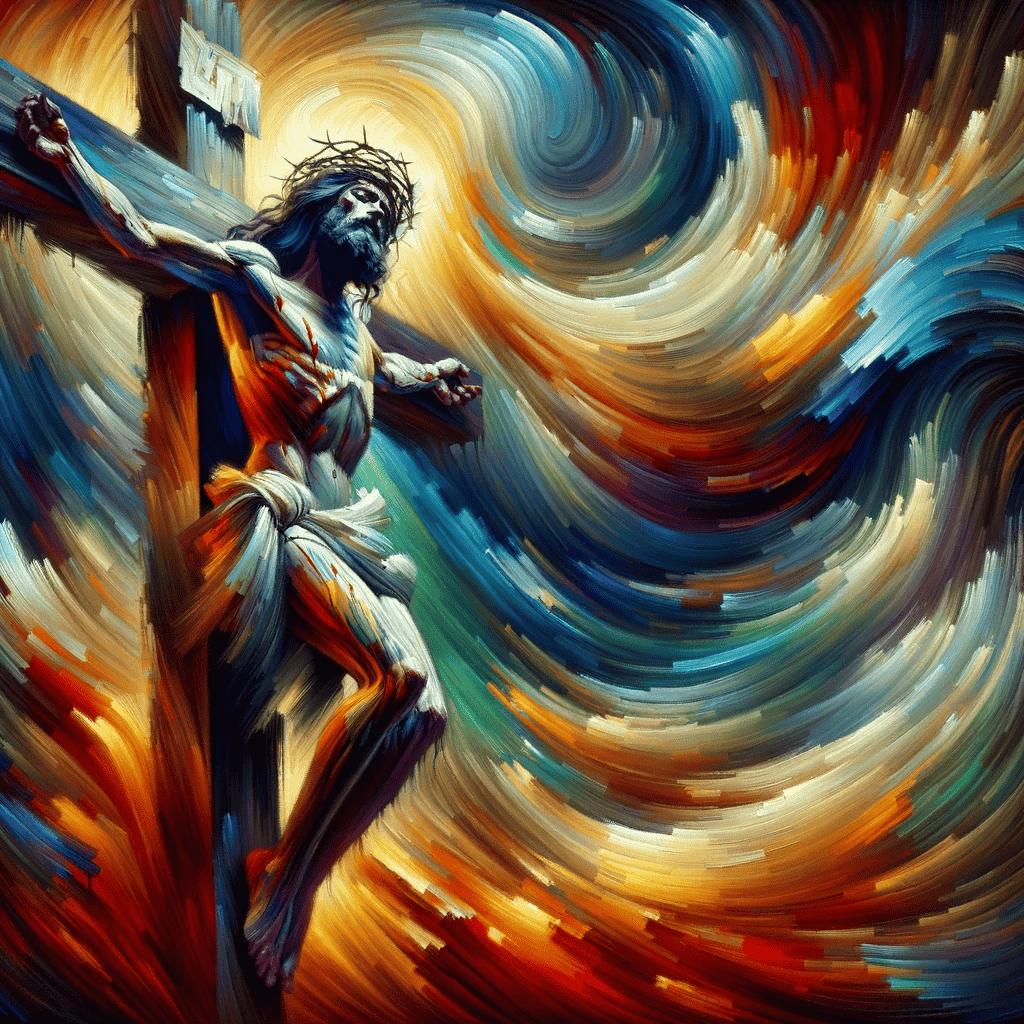
Eternal God
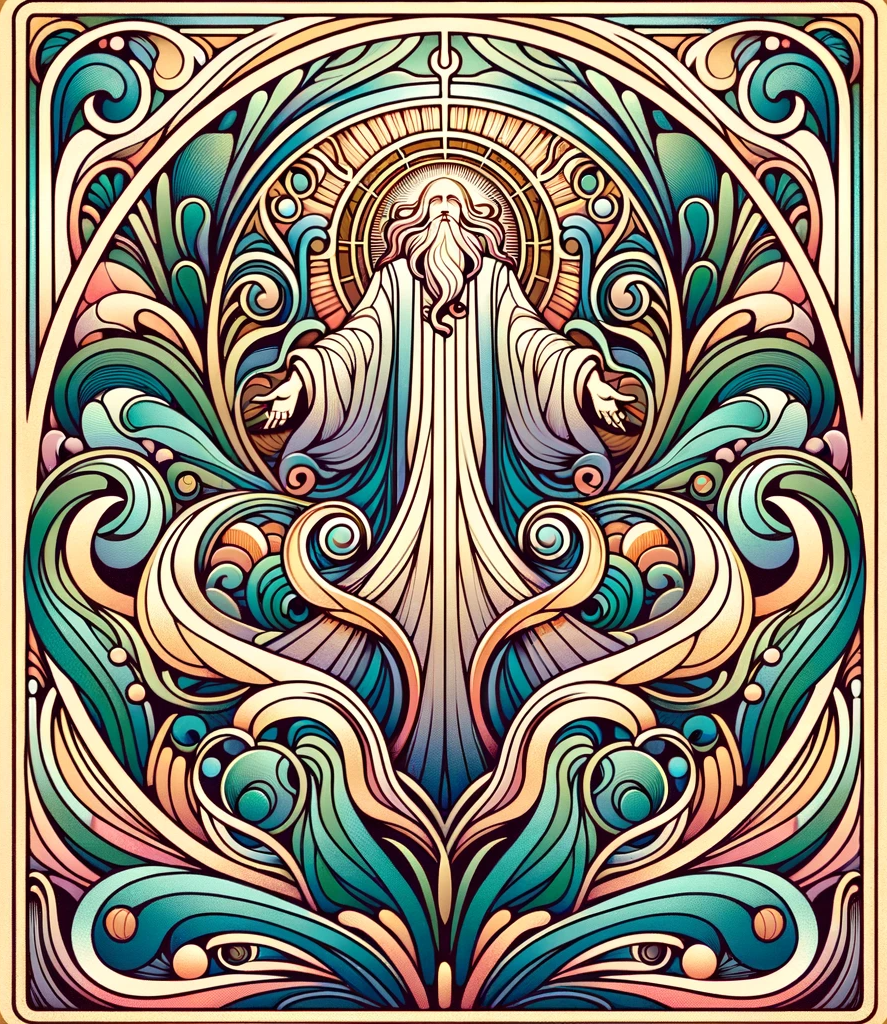
The series of images developed here each reflect a unique interpretation of the eternal divine, growing progressively more elaborate and intense in their details and symbolism.
The first image sets the foundation with Art Nouveau influences, using fluid lines and natural forms to represent divinity. The figure is central, with a sense of calm and balance, reflecting a traditional depiction of a divine being.
The second stage increases the intricacy of the patterns and the vibrancy of the color palette. The figure becomes more integrated with the surrounding elements, suggesting a deeper connection between the divine and the cosmos.
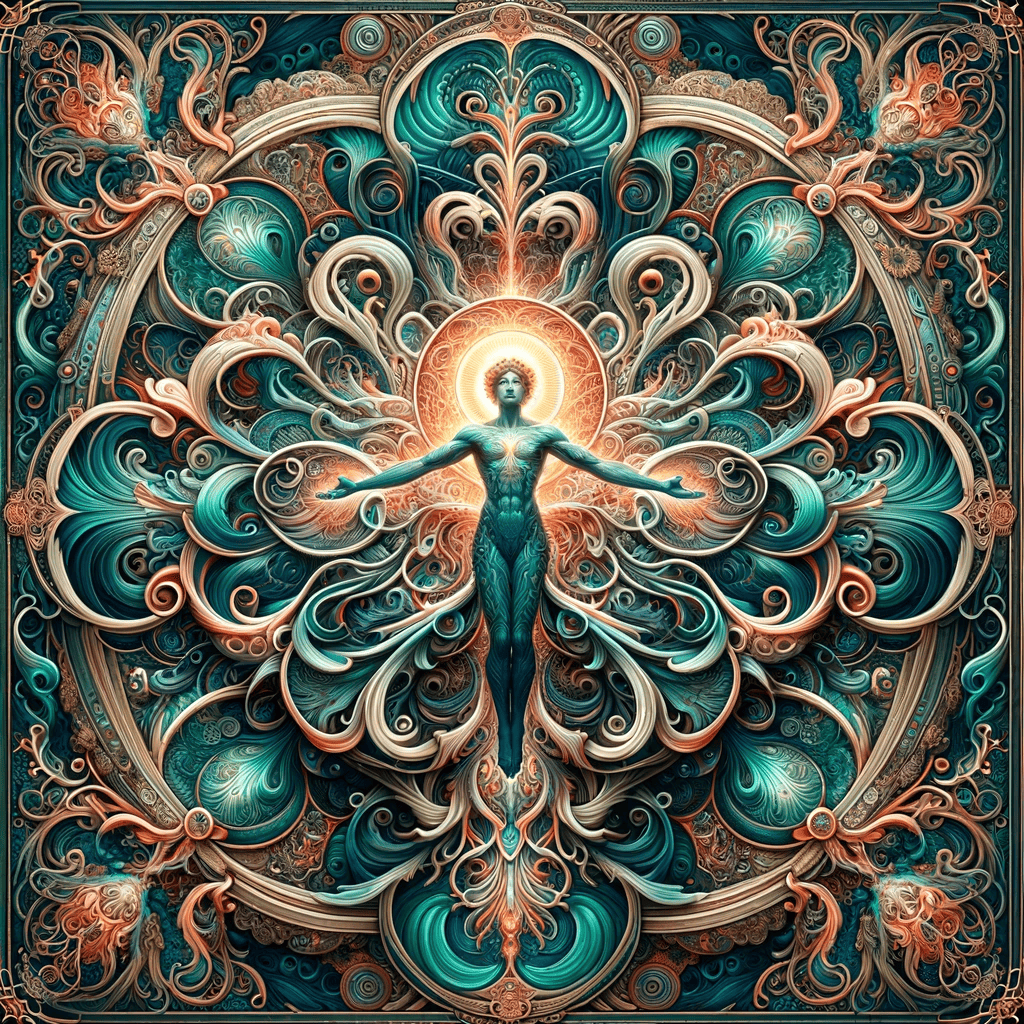
In the third image, the extremity of detail is further magnified. The figure in the center begins to radiate energy, and the surrounding patterns become more dynamic, almost overwhelming in their complexity, indicating a more intense divine presence.
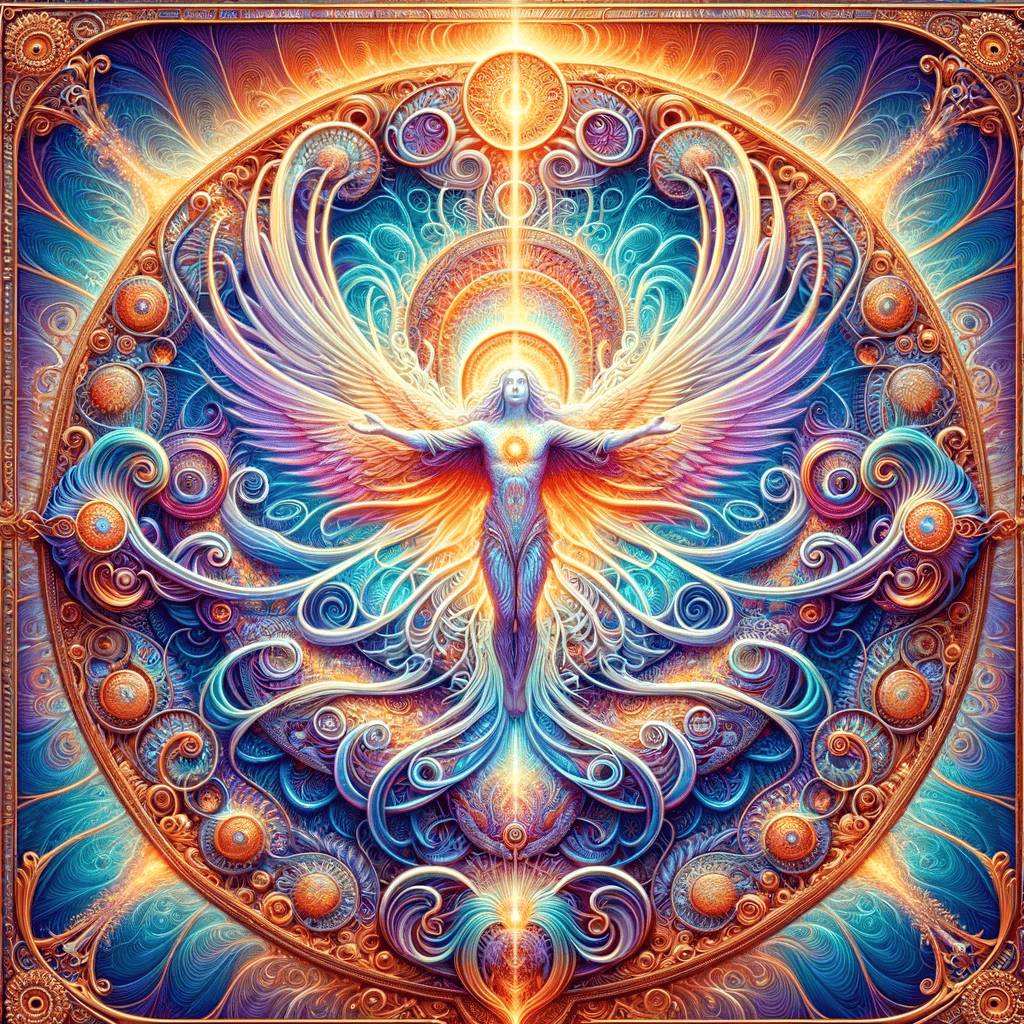
The fourth stage reaches a higher level of extremity, with a color palette that is even more vivid and an ornamentation that becomes dense and fractal-like. This suggests a divine figure that is not just a being but a force, an energy source that’s emanating a powerful, celestial light.
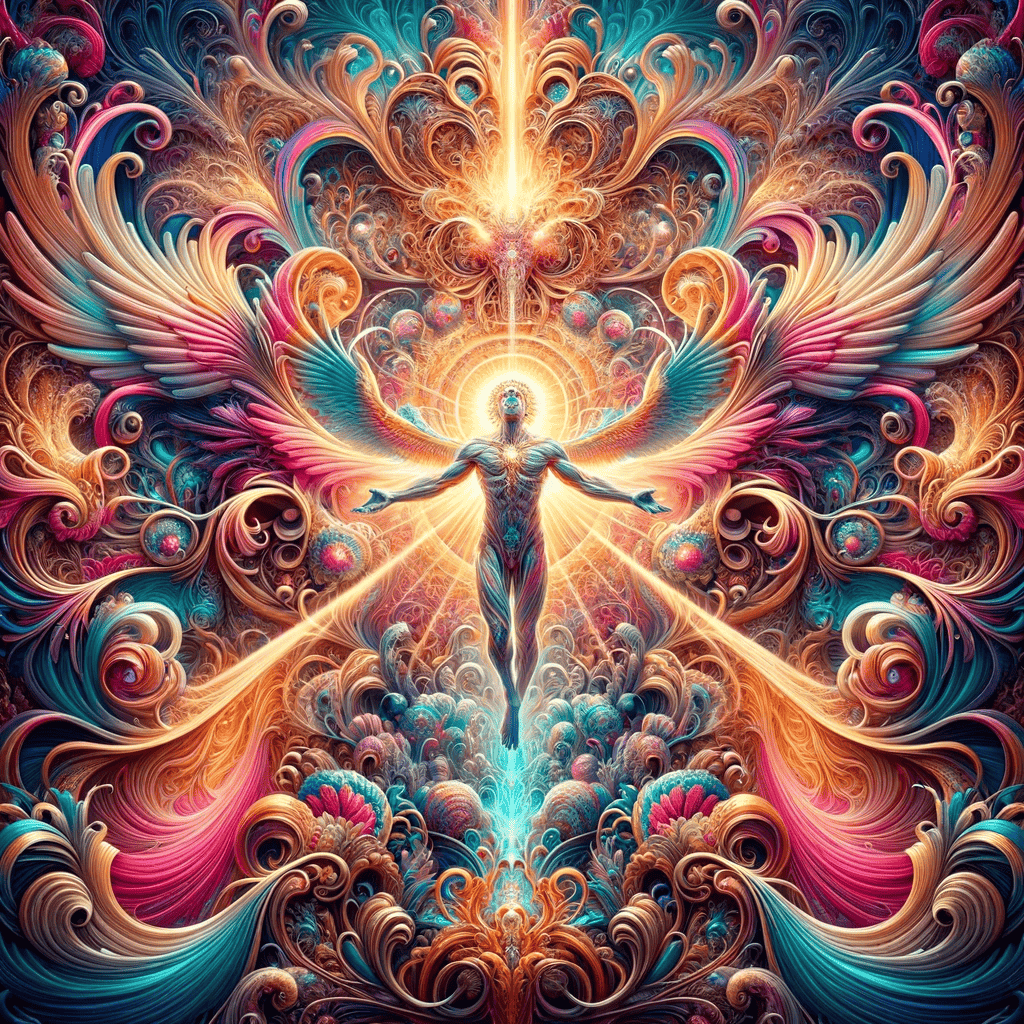
The final image is the apex of the series, where the divine figure and the surrounding elements are no longer distinct but are interwoven into an intricate tapestry of infinite complexity. The colors and light suggest not just a representation of a divine being, but the essence of divinity itself, something eternal and boundless.
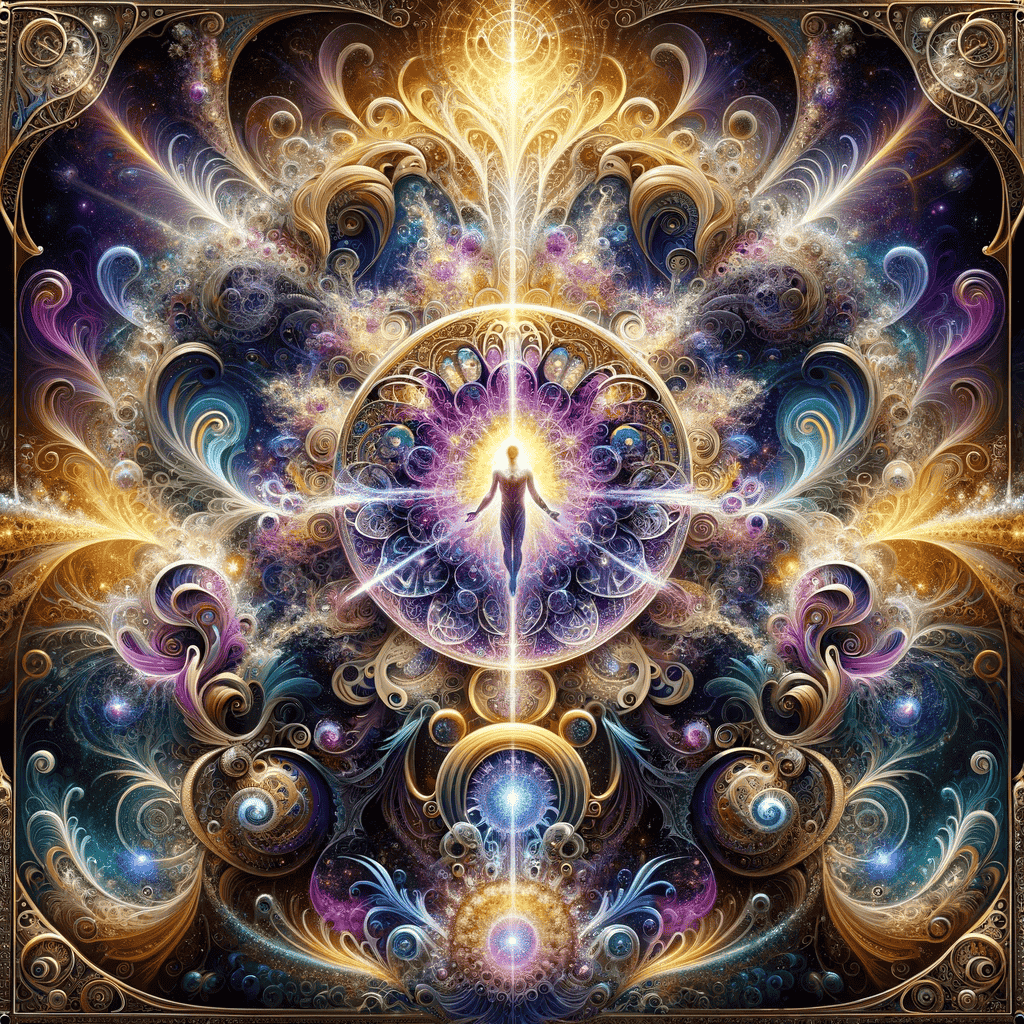
The progression here could symbolize the unfolding understanding and experience of the divine – from a figure that is recognizable and distinct to an all-encompassing presence that defies conventional representation, mirroring a journey from the known to the mystical.