Old Masters · John 3:16 · 4 October 2026 · 8 works
For God so loved the world
For God so loved the world, that he gave his only begotten Son, that whosoever believeth in him should not perish, but have everlasting life.
Eight paintings from five centuries, hung along the words of a single verse. Each one shows a different part of what the sentence says.
“The same came to Jesus by night”
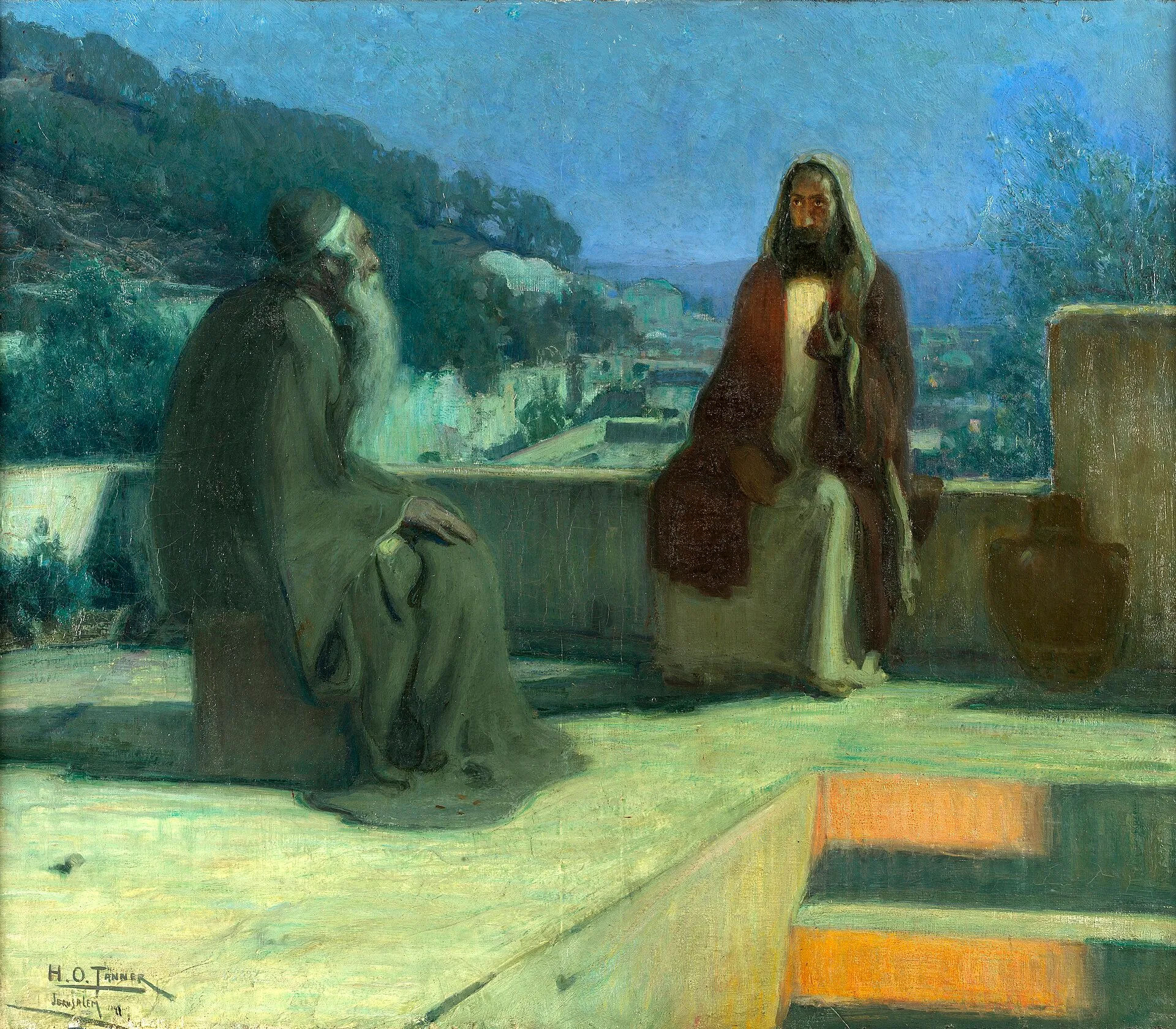
The verse belongs to a conversation. Nicodemus, a Pharisee and a member of the council, comes to Jesus under cover of darkness (John 3:1–2). Tanner, who had travelled to Palestine, seats the two on a flat roof above Jerusalem. The only warm light rises from the stairwell and falls on the teacher.
“As Moses lifted up the serpent in the wilderness”
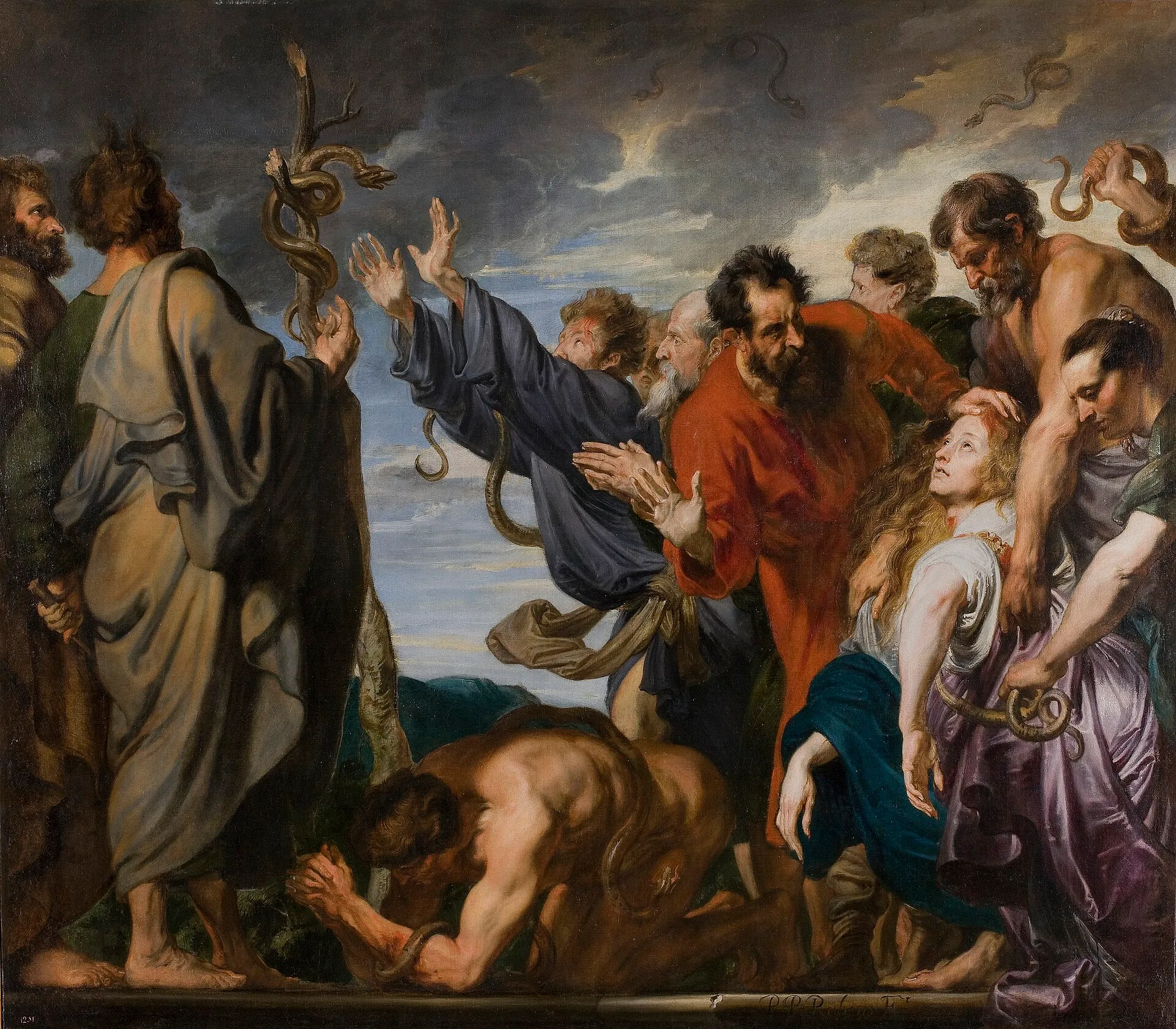
Two verses earlier Jesus reaches back to Numbers 21: whoever had been bitten and looked up at the serpent of brass on its pole stayed alive. “Even so must the Son of man be lifted up.” Van Dyck was about twenty when he painted the bitten straining towards the pole.
“For God so loved the world”
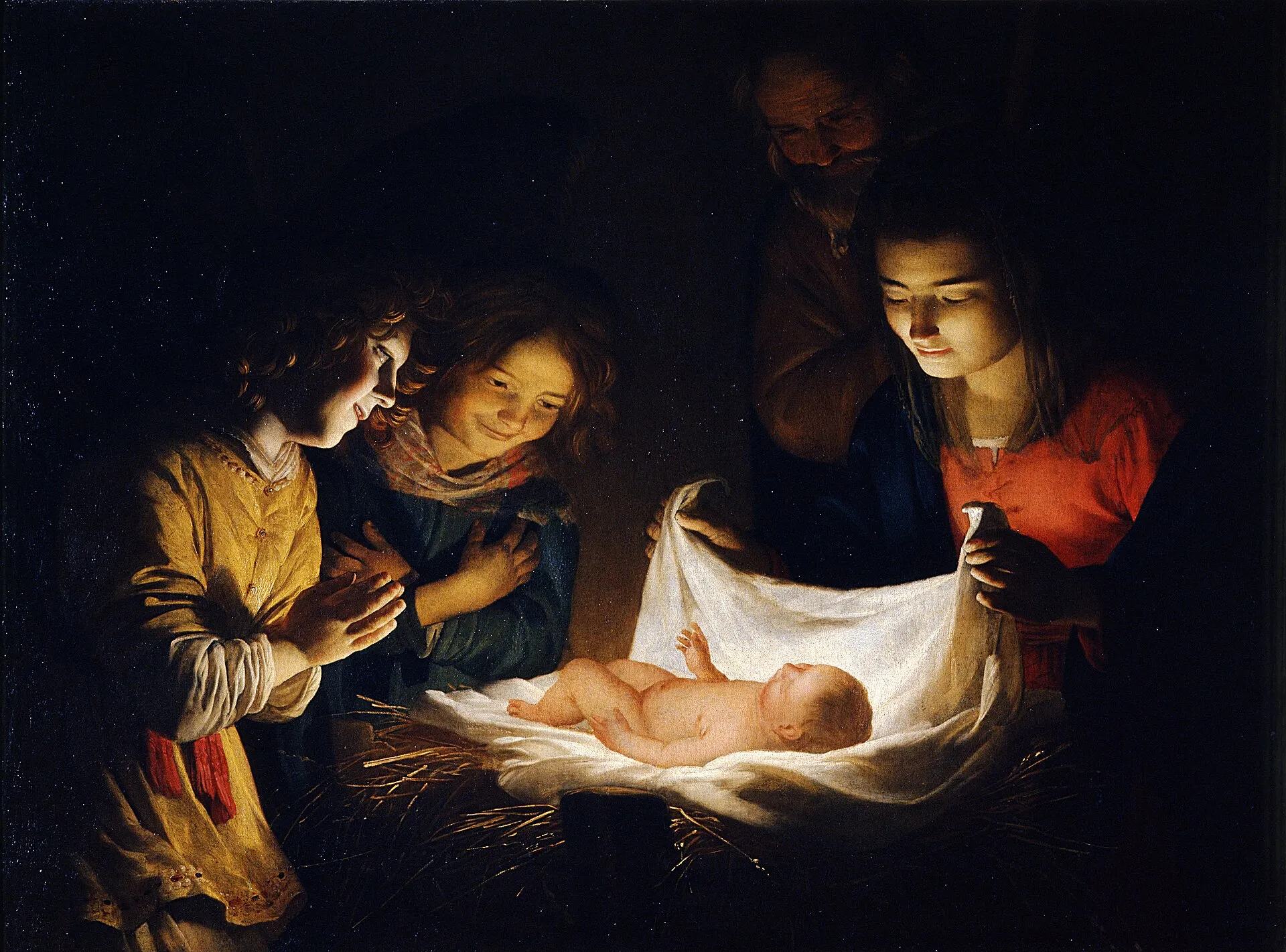
In Honthorst's night scene there is no lamp and no candle. All the light in the picture comes from the child. A few lines further on John puts it in words: “light is come into the world” (John 3:19).
“that he gave his only begotten Son”
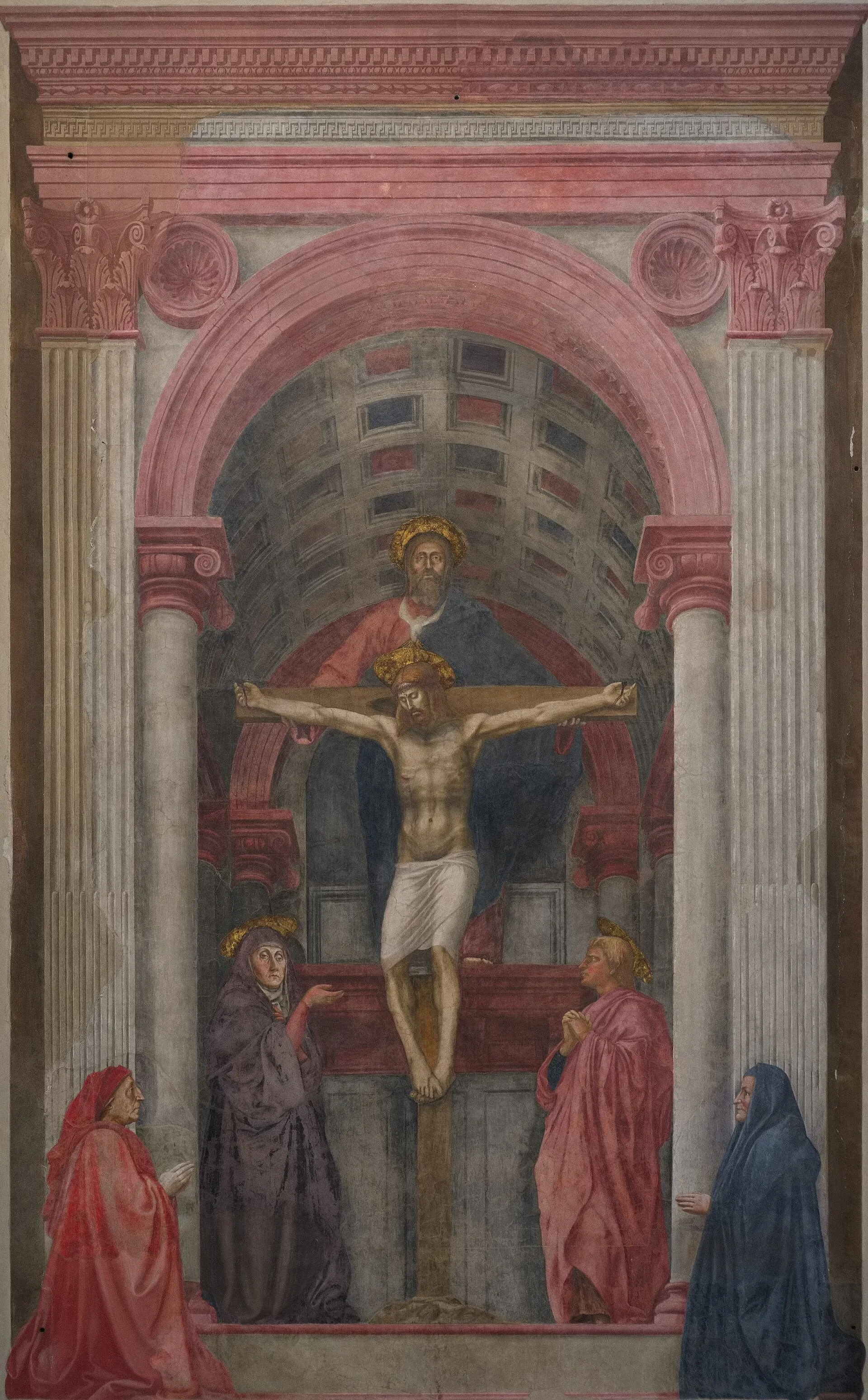
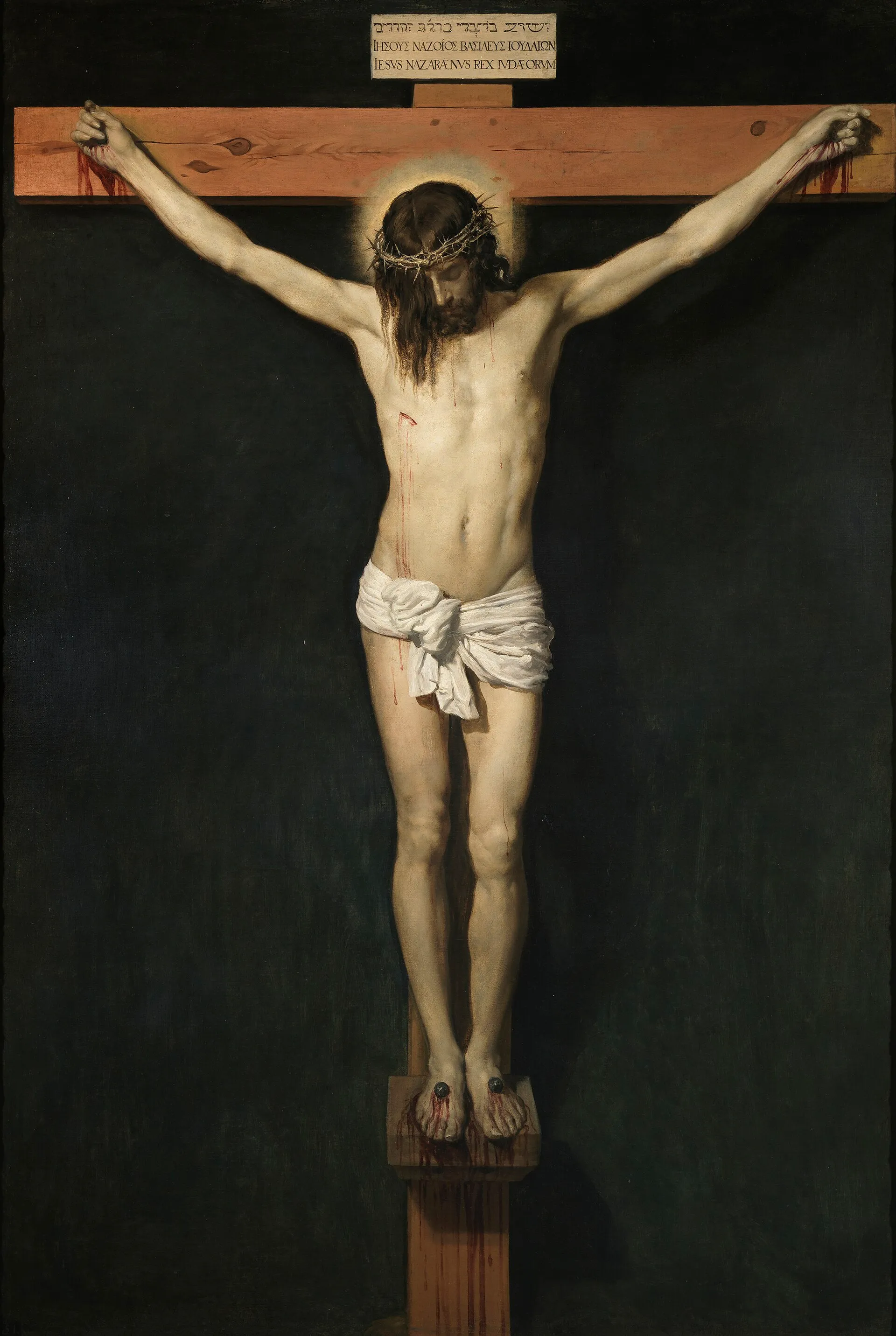
Masaccio shows the giving itself: the Father stands behind the cross and holds its beam, presenting the Son to whoever steps in front of the wall. Velázquez two centuries later leaves everything else out. No landscape, no bystanders, only the Son before the dark.
“that whosoever believeth in him”
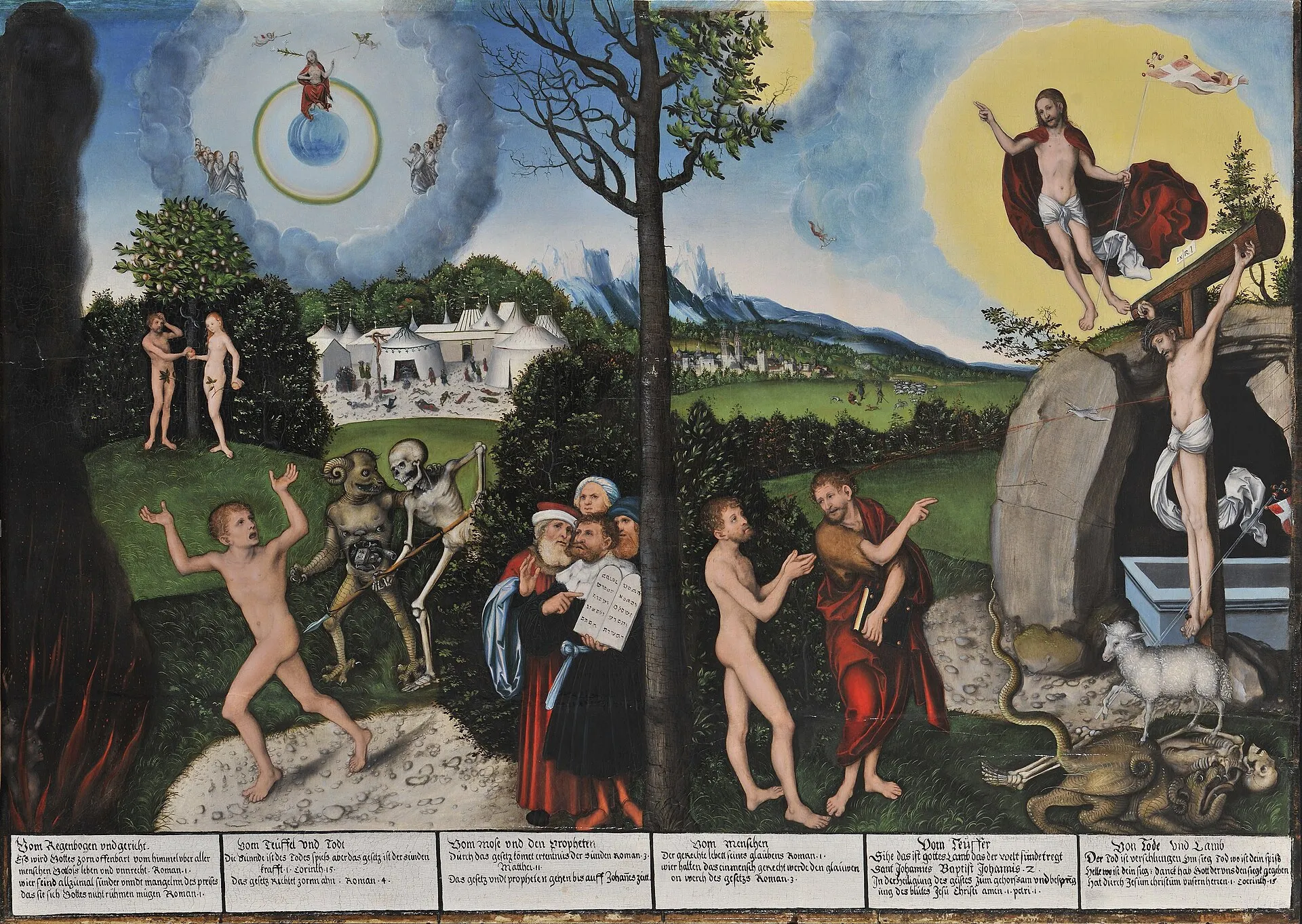
Cranach painted this panel in Wittenberg in 1529, close to Luther. A tree, bare on one side and green on the other, divides it. On the side of the law, death and the devil drive a man towards the fire. On the side of grace, John the Baptist points the same man to the Crucified. Believing, here, is looking where the finger points. The serpent on the pole is in the picture as well.
“should not perish”
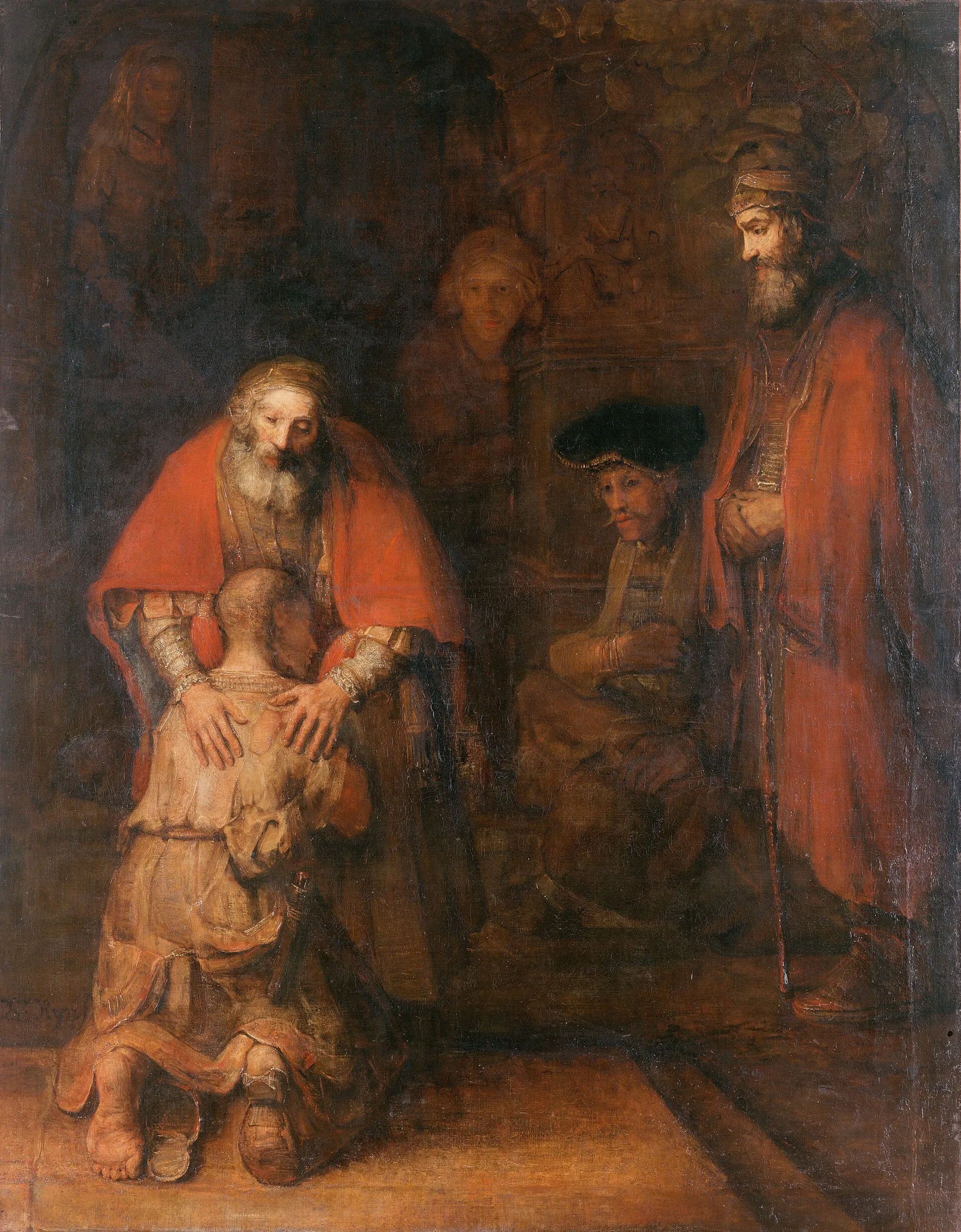
The Greek word for “perish” is the word Luke uses for the son who “was lost, and is found” (Luke 15:24). Rembrandt painted the homecoming in his last years: the worn soles of the son, and the two hands of the father on his back.
“but have everlasting life”
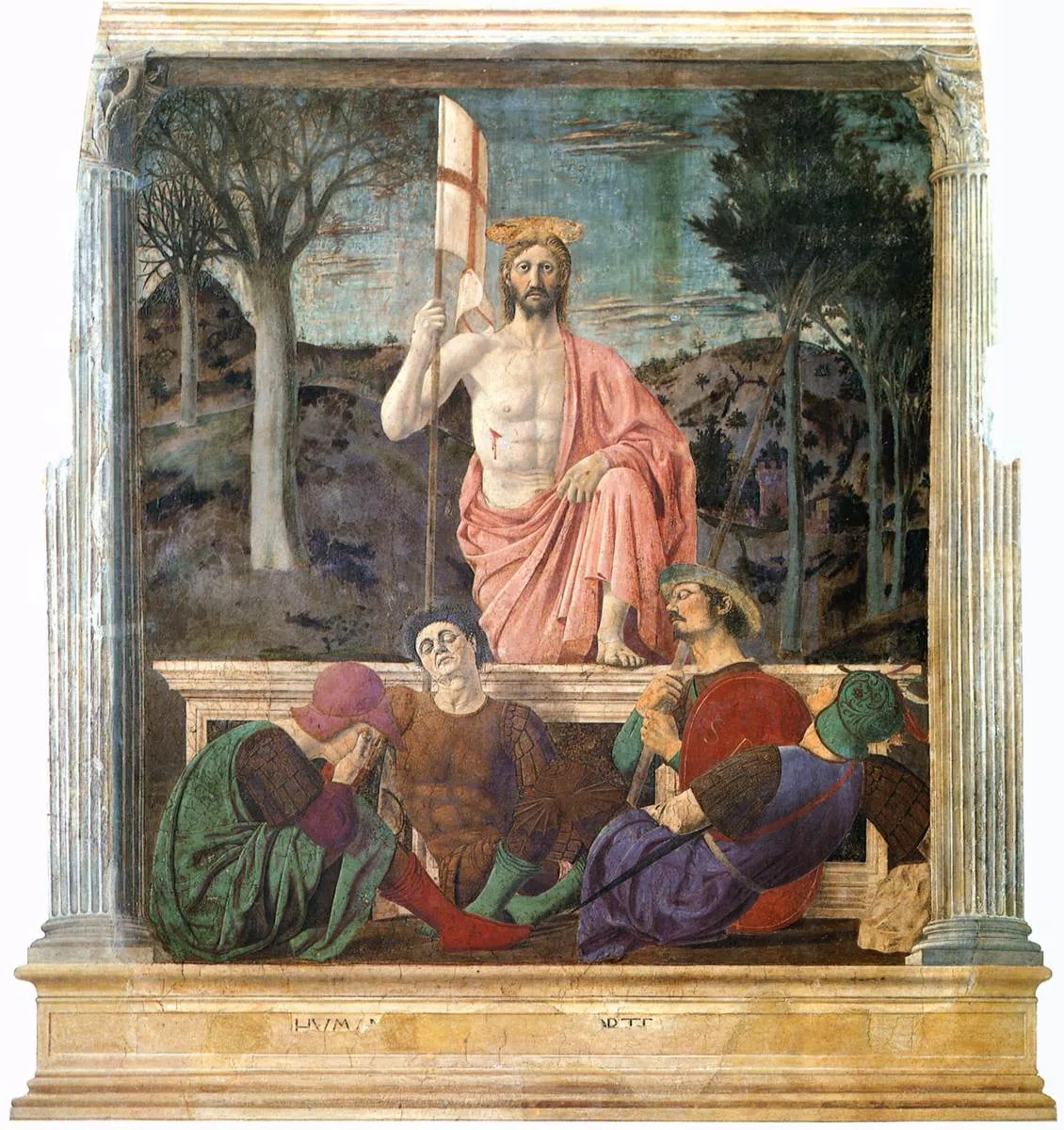
Piero painted the Resurrection for the town hall of Sansepolcro, the town that is named after the Holy Sepulchre. The guards sleep. Christ sets his foot on the edge of the tomb, and behind him the trees are bare on the left and in leaf on the right.